Why Do Cats Knock Things Over Why Cats Push Items Off Tables Explained
- Sarah Villa

- Aug 4
- 11 min read
Cats knock things off tables and shelves because the behavior can satisfy curiosity, hunting instincts, play needs, attention seeking, stress relief, or a desire to control their space. If you have wondered why do cats knock things over, the short answer is that your cat is usually testing, exploring, communicating, or trying to get a reaction.
Meta Description: Why do cats knock things over? Learn the instinct, boredom, anxiety, and attention reasons, plus simple ways to protect your shelves at home.
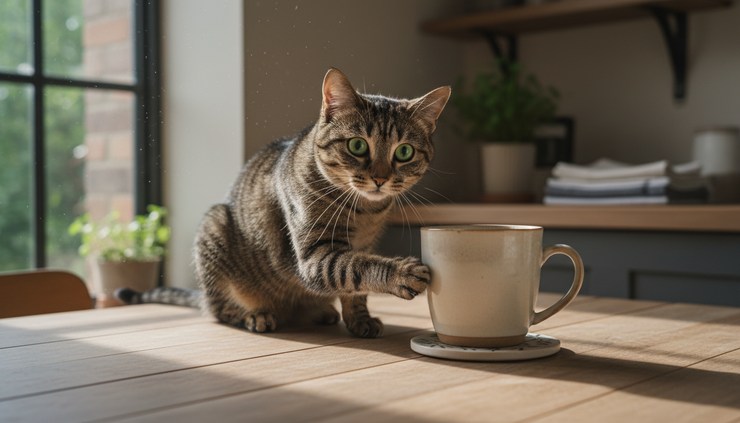
Cats are not being “bad” in the way people often mean it. A cat that pushes a pen, cup, remote, or houseplant off a surface is doing something that makes sense in cat language.
Your job is not to punish the behavior out of your cat. Your job is to understand what need sits underneath it, then give your cat a safer, more rewarding option.
Why do cats knock things over in the first place?
A cat’s paw is a powerful investigation tool. Cats use their paws to touch, trap, test, and move objects. When something sits on a table, your cat may see it as a tiny mystery.
Will it roll?
Will it bounce?
Will it make a sound?
Will you rush over?
That simple tap can give your cat a lot of information. It can also create a very entertaining chain reaction.
Common reasons cats push things off tables include:
Curiosity
Your cat wants to know what the object does.
Hunting instincts
Small objects can mimic prey movement when they slide or fall.
Boredom
A quiet home with little enrichment can make household items more interesting.
Attention seeking
If you react every time, your cat learns the trick works.
Anxiety or stress
Some cats displace nervous energy by pawing, pacing, or knocking things down.
Sound sensitivity
Noises from falling items may be startling to you but fascinating to your cat.
Environmental control
Cats like clear paths, safe perches, and predictable spaces.
The key is to look at the pattern. A cat that knocks one pen off while exploring is different from a cat that clears the nightstand every morning at 5:00 a.m.
Is knocking things over normal cat behavior?
Yes, knocking things over can be normal cat behavior. Many healthy, happy cats do it once in a while. It becomes a problem when it is frequent, dangerous, destructive, or tied to fear, stress, or lack of stimulation.
A normal version might look like this:
Your cat taps a bottle cap during play.
Your cat pushes a small item, watches it fall, then walks away.
Your cat investigates a new object on the counter.
Your cat does it more often when bored or under-exercised.
A concerning version might look like this:
Your cat knocks things over after loud noises or visitors arrive.
Your cat seems restless, tense, or hypervigilant.
Your cat targets breakable items repeatedly.
Your cat does it when you ignore meowing or food requests.
Your cat combines it with hiding, aggression, overgrooming, or appetite changes.
If the behavior appears suddenly or comes with changes in eating, litter box habits, sleep, or mood, check in with your veterinarian. This article is informational and does not replace veterinary advice.
How do hunting instincts make cats push items off tables?
Cats are built to notice tiny movements. A pen that rolls, a hair tie that springs, or a bottle cap that skitters can trigger the same part of your cat’s brain that reacts to prey.
Even indoor cats have hunting instincts. They do not need to be hungry to stalk, pounce, bat, and chase. Those behaviors are part of how cats stay mentally and physically engaged.
Why do small objects look like prey?
Small household items can behave like prey in ways your cat finds rewarding.
They may:
Slide away when tapped
Roll under furniture
Make clicking or rattling sounds
Move suddenly when they hit the floor
Become “hidden” and worth searching for
To your cat, a pen dropping off the table may be more exciting than the pen itself. The fall creates motion, noise, and a chase.
How can you redirect hunting without rewarding the mess?
Give your cat a better hunt.
Try short play sessions with:
Wand toys that move like birds or insects
Small plush toys your cat can grab and kick
Crinkle balls or soft balls that roll safely
Food puzzles that make your cat work for treats
Tossed kibble games down a hallway
A simple enrichment toy, such as a puzzle feeder or treat ball, can turn your cat’s “push and watch” habit into a safer challenge. The benefit is not just distraction. It gives your cat a job.
Could boredom be the reason your cat knocks things down?
Boredom is one of the most common reasons cats knock things down. Indoor cats often live in safe but predictable homes. If nothing moves, rustles, rolls, or changes, your cat may create entertainment.
A bored cat may knock things over more when:
You are busy or away
The same toys stay out all day
There are no window views or climbing spots
Meals are served in a bowl with no effort
Playtime is rare or too short
Your cat is young, energetic, or highly social
Boredom can look like mischief, but it often means your cat needs more natural cat activities.

What enrichment helps prevent knocking things over?
Good cat enrichment meets real feline needs. It should offer movement, choice, scent, climbing, scratching, searching, and rest.
Start with:
Vertical space
Cat trees, shelves, and window perches help your cat feel secure.
Rotating toys
Keep only a few toys out, then swap them every few days.
Puzzle feeding
Let your cat paw, roll, or search for part of a meal.
Scratching options
Offer both vertical and horizontal scratchers.
Window watching
A safe perch near a window can keep some cats busy for long stretches.
Scent variety
Catnip, silvervine, or safe scent trails can add novelty.
Interactive play
Your involvement matters more than a pile of toys on the floor.
PetstoreForYou.com readers often look for toys that solve a real problem, not just add clutter. A well-chosen enrichment toy can help because it gives your cat an approved way to bat, chase, and problem-solve.
Is your cat knocking things over for attention?
Yes, your cat may knock things over because it gets your attention fast. Even a negative reaction can strengthen the habit.
If your cat pushes a glass toward the edge and you jump up, talk loudly, run over, pick them up, or feed them, your cat learns a clear lesson:
The paw tap controls the human.
Attention-seeking knocking often happens:
Early in the morning
When you are on the phone
While you work or watch TV
Near mealtime
After you ignore meowing
When your cat wants a door opened
This does not mean your cat is plotting against you. It means your cat found a behavior that works.
How should you respond in the moment?
Stay calm. Your reaction teaches the lesson.
Try this:
Quietly remove the dangerous item if needed.
Avoid scolding, chasing, or laughing.
Redirect your cat to an approved toy or perch.
Reward calm behavior after your cat disengages.
Change the setup so the same item is not available next time.
Do not wait until your cat is already pawing the water glass to offer attention. Give attention before the behavior starts.
A cat who gets predictable play, meals, and affection is less likely to invent dramatic ways to ask for them.
Can anxiety, noises, or strangers cause cats to knock items off shelves?
Stress can absolutely play a role. Cats prefer routine, scent familiarity, and control over escape routes. When something feels unpredictable, some cats become more active, jumpy, vocal, or destructive.
A stressed cat may knock things over after:
Guests arrive
A new pet enters the home
Furniture moves
Loud noises occur
Construction starts nearby
A baby or child visits
A dog barks often
Outdoor cats appear at windows
Feeding or litter routines change
In multi-pet homes, sound matters. If you are also trying to stop dog barking, your cat may benefit from the same careful observation used to understand why dogs bark, choose dog barking solutions, reduce excessive barking, and build a calm dog routine. Cats and dogs both do better when the home feels predictable.
What does anxiety-related knocking look like?
Watch your cat’s body language.
Signs of stress may include:
Flattened ears
Wide pupils
Low crouched posture
Tail flicking
Hiding
Sudden running
Swatting or biting
Overgrooming
Reduced appetite
Avoiding certain rooms
If your cat knocks things down near visitors, loud appliances, or a barking dog, the item may not be the real issue. The trigger may be the environment.
How can you help a nervous cat feel safer?
Build safety into your home before stressful events happen.
Give your cat:
A quiet room with food, water, litter, and bedding
Elevated escape routes
Hiding spots that are always available
A predictable feeding schedule
Slow introductions to visitors and pets
White noise or soft music during loud events
Calming products when appropriate
A cat calming diffuser, calming spray, or soft cave-style bed may help some cats settle during routine stressors. These products work best as part of a full plan, not as a stand-alone fix.
Does lack of exercise make cats knock things over more?
Yes. A cat with unused energy will find a way to use it. Tables, shelves, curtains, cords, and counters can become part of the workout.
Cats are sprinters, not marathon runners. They often do best with short bursts of activity throughout the day.
Aim for several brief play periods, especially:
Before breakfast
Before dinner
Before your bedtime
After long quiet stretches
Before guests arrive, if your cat gets overstimulated
A good play session mimics hunting:
The toy moves away from your cat.
Your cat stalks and waits.
Your cat pounces or chases.
Your cat catches the toy.
The session ends with food or a treat.
That final “catch and eat” step matters. It completes the hunting cycle and can leave your cat more relaxed.

How can you train a cat not to knock things over?
You can train your cat, but the goal is not to intimidate them. The goal is to make the right behavior easier and more rewarding than the wrong one.
Cats learn well when consequences are clear and safe.
Use three simple rules:
Prevent access to fragile or tempting objects.
Reward the behavior you want.
Redirect the need behind the behavior.
What should you avoid when training?
Avoid punishment that scares your cat.
Do not use:
Yelling
Spraying water
Hitting or shoving
Throwing objects
Loud startle devices
Forced confinement as punishment
Fear can create bigger problems, including hiding, aggression, and more stress-related behavior.
What training methods work better?
Use reward-based training.
Try these steps:
Clear tempting surfaces
Put breakables, cups, cords, and small objects away.
Create legal knocking zones
Offer soft toys, ball tracks, or puzzle toys on the floor.
Teach a station cue
Reward your cat for going to a mat, bed, or perch.
Reward calm choices
Treat your cat when they sit on the cat tree instead of the table.
Use timing
Reward before your cat starts pawing the object.
Add texture barriers if needed
Some cats dislike sticky mats or foil, but use gentle options and give them a better place to go.
Keep sessions short
A few minutes is enough.
Training works best when the home setup supports it. If a shelf is packed with interesting objects and your cat has nothing else to do, training will feel like a battle.
What household changes stop cats from pushing things off shelves?
Small setup changes can reduce the habit quickly.
Start with the places your cat targets most.
Common hotspots include:
Nightstands
Kitchen counters
Bathroom ledges
Bookshelves
Windowsills
Work tables
Entry tables
Make those areas boring, safe, or harder to access.
How can you protect breakable items?
Use practical changes:
Move fragile items behind cabinet doors.
Use museum putty for decor that must stay out.
Choose heavier, wider-based vases.
Keep drinking glasses away from edges.
Store pens, hair ties, and chargers in drawers.
Avoid placing plants on narrow shelves.
Use closed bins for small loose items.
Keep toxic plants, medications, essential oils, rubber bands, string, and sharp objects fully out of reach. If your cat knocks something down and eats part of it, call your veterinarian or a pet poison hotline right away.
Should you let your cat on tables and shelves?
That depends on your household rules. What matters most is consistency.
If a surface is off-limits, offer a nearby yes-space that gives the same reward.
For example:
If your cat wants | Offer this instead |
Height | A cat tree or wall shelf |
A window view | A stable window perch |
Your attention | A scheduled play session |
Pawing and batting | A puzzle toy or ball track |
A quiet escape | A covered bed or safe room |
Cats are more willing to leave your things alone when their own spaces meet the same need.
What checklist helps you solve the behavior faster?
Use this checklist for one week. Look for patterns before you assume your cat is just being naughty.
[ ] Note the time of day your cat knocks things over.
[ ] Write down what item your cat targets.
[ ] Watch what happens right before the behavior.
[ ] Check for triggers such as guests, noises, dogs, or hunger.
[ ] Add two short play sessions each day.
[ ] Rotate toys instead of leaving all toys out.
[ ] Move fragile items away from edges.
[ ] Add one vertical perch or improve an existing one.
[ ] Use puzzle feeding for part of one meal.
[ ] Reward your cat for resting on an approved perch.
[ ] Avoid yelling, chasing, or dramatic reactions.
[ ] Contact your veterinarian if the behavior is sudden or paired with health changes.
How do you build a calm daily routine for your cat?
A calm routine helps because cats feel safer when life is predictable. You do not need a strict schedule down to the minute. You need repeatable rhythms your cat can trust.
A simple daily routine might look like this:
Morning play for 5 to 10 minutes
Breakfast after play
Window perch time
Quiet midday rest
Puzzle feeder or treat search
Evening interactive play
Dinner after play
Calm brushing, petting, or nearby sitting
Lights-down bedtime routine
Try to pair active time with meals. This follows a natural pattern: hunt, catch, eat, groom, sleep.

Keep your response predictable too. If your cat knocks something over, stay boring. If your cat uses their perch, toy, or scratcher, quietly reward that choice.
That is how good habits grow.
What internal links would help readers next?
Here are five helpful internal link ideas for PetstoreForYou.com:
What is the main takeaway about why do cats knock things over?
When you ask why do cats knock things over, look past the mess and find the need. Your cat may need more play, a safer perch, a calmer routine, less stress, better enrichment, or a more predictable way to get your attention.
Protect the fragile items, reward calm choices, and give your cat approved ways to bat, chase, climb, and explore. Most cats do not need harsher discipline. They need a home that makes good behavior easier.
FAQ
Why do cats knock things over at night?
Cats often knock things over at night because they are awake, bored, hungry, or seeking attention. Add evening play, feed after play, and clear nightstands before bed.
Why does my cat knock things over while looking at me?
Your cat may have learned that knocking things down gets a fast reaction. Stay calm, avoid dramatic attention, and reward your cat for sitting on an approved perch instead.
Are cats knocking things over on purpose?
Yes, cats often push objects intentionally, but not out of spite. They may be testing movement, creating play, hunting, or asking for something.
Why do cats push cups off tables?
Cups are tempting because they sit upright, move when tapped, make noise when they fall, and often get your immediate attention.
Can anxiety make my cat knock things off shelves?
Yes. Anxiety from noises, strangers, new pets, or household changes can lead to restless pawing and knocking. Give your cat safe hiding spots, vertical space, and predictable routines.
How do I stop my cat from knocking things over for food?
Feed on a routine, use puzzle feeders, and avoid feeding right after the knocking starts. Reward quiet waiting so your cat learns calm behavior works better.
Should I spray my cat with water for knocking things over?
No. Spraying can scare your cat and damage trust. Use prevention, redirection, enrichment, and rewards for better choices.
Do kittens knock things over more than adult cats?
Often, yes. Kittens are extremely curious and energetic. They need frequent play, safe objects to explore, and protected surfaces while they learn household rules.
What toys help cats stop pushing things off tables?
Wand toys, puzzle feeders, ball tracks, treat balls, kicker toys, and crinkle toys can help. Choose toys that let your cat bat, chase, grab, and solve problems.
When should I call a vet about this behavior?
Call your veterinarian if the behavior starts suddenly or comes with hiding, appetite changes, litter box changes, aggression, overgrooming, or signs of pain.


Comments