How Often Should You Feed Your Dog? Expert Dog Feeding Schedule Guide
- Sarah Villa

- Aug 10
- 12 min read
Most adult dogs do best with two meals a day, about 8 to 12 hours apart. The right dog feeding schedule also depends on your dog’s age, size, health, activity level, and the type of food you serve.
Feeding your dog on a steady routine helps support digestion, energy, training, and healthy weight. It also makes life easier for you because you can predict potty breaks, appetite changes, and when your dog may need food, water, or rest.

How often should you feed your dog each day?
For most healthy adult dogs, feeding twice daily is the best place to start.
A common schedule looks like this:
Dog life stage | Typical feeding frequency | Simple example |
Puppy 8 to 12 weeks | 3 to 4 meals daily | Breakfast, lunch, dinner, late snack |
Puppy 3 to 6 months | 3 meals daily | Morning, midday, evening |
Puppy 6 to 12 months | 2 to 3 meals daily | Morning and evening, sometimes midday |
Adult dog | 2 meals daily | Morning and evening |
Senior dog | 2 meals daily, sometimes smaller meals | Morning and evening, or 3 smaller meals |
Some dogs can eat once daily, but twice daily is usually easier on the stomach and helps prevent long gaps without food. It also gives you more chances to notice changes in appetite.
If your dog has diabetes, a history of vomiting bile, digestive disease, pregnancy, nursing needs, or a medical condition, ask your veterinarian for a feeding plan. This guide is informational and does not replace veterinary advice.
Why is twice a day common for adult dogs?
Two meals a day works well because it gives your dog:
More even energy
Less hunger between meals
A predictable potty routine
Better portion control
A calmer dog meal routine
It can also reduce begging because your dog learns when food arrives. Dogs love patterns. A simple morning and evening rhythm is easy for most households to keep.
Can some dogs eat three meals a day?
Yes. Three smaller meals may help dogs who:
Vomit yellow bile when their stomach is empty
Have sensitive digestion
Are very small or toy breeds
Are highly active
Are seniors who do better with smaller portions
Need help transitioning from free-feeding to meal-feeding
Three meals does not mean more food overall. You divide the daily amount into smaller servings.
Is once-a-day feeding okay for dogs?
Some adult dogs tolerate one meal a day, but it is not ideal for every dog. A long gap between meals can lead to hunger, nausea, fast eating, or begging.
If you feed once daily and your dog seems comfortable, has normal stools, maintains a healthy weight, and your vet has no concerns, it may be acceptable. Still, many dogs benefit from splitting the same daily calories into two meals.
What dog feeding schedule works best by age?
Age is one of the biggest factors in feeding frequency. Puppies need frequent meals because they are growing quickly. Adults need consistency. Seniors may need smaller, easier meals.
What is the best puppy feeding schedule?
A good puppy feeding schedule supports growth without overloading a small stomach.
Most puppies do well with:
8 to 12 weeks old
3 to 4 meals per day
3 to 6 months old
3 meals per day
6 to 12 months old
2 to 3 meals per day, depending on breed and growth
After maturity
2 meals per day for most dogs
Large and giant breed puppies often mature later than small breeds. They also need careful calorie and mineral balance to support steady growth. Choose a puppy food that matches your dog’s expected adult size, and follow your vet’s advice.
A simple puppy day might look like:
Time | Meal |
7:00 a.m. | Breakfast |
12:00 p.m. | Lunch |
5:30 p.m. | Dinner |
9:00 p.m. | Small snack, if needed for young puppies |
Pick up uneaten food after about 15 to 20 minutes unless your vet tells you otherwise. This helps your puppy learn mealtimes and makes appetite changes easier to spot.
What schedule works for adult dogs?
Most adult dogs do well with breakfast and dinner.
A simple adult schedule:
Time | What to do |
7:00 a.m. | Potty break, then breakfast |
Midday | Walk, play, training, or rest |
6:00 p.m. | Dinner |
Evening | Potty break and calm time |
Try not to feed a large meal right before intense exercise. Give your dog time to digest before running, rough play, or high-energy activity. This is especially wise for large, deep-chested breeds.
What changes with senior dog feeding?
Senior dog feeding is about comfort, consistency, and watching for change. Many older dogs still do well with two meals daily, but some prefer three smaller meals.
Watch for:
Slower eating
Dental discomfort
Weight gain from lower activity
Weight loss without trying
Increased thirst
Changes in stool
Confusion around mealtimes
Older dogs may need a senior formula, softer food, a raised bowl if recommended, or a slower pace. If your senior dog suddenly eats less or seems hungry all the time, schedule a vet visit.

How much food should you give at each meal?
Start with the feeding guide on your dog food label, then adjust based on your dog’s body condition, activity level, treats, and your vet’s advice.
The label gives a daily amount, not always a per-meal amount. If the package says your dog needs 2 cups per day and you feed twice daily, each meal is usually 1 cup.
How do you divide your dog’s daily food?
Use this simple method:
Find the recommended daily amount on the food label.
Check that the amount matches your dog’s current weight and life stage.
Subtract calories from treats, toppers, and chews.
Divide the remaining daily food by the number of meals.
Track your dog’s weight and body shape every few weeks.
Treats count. If your dog gets training treats, dental chews, table scraps, or food puzzles, those calories add up quickly.
As a general habit, keep treats modest and purposeful. Use small pieces for training instead of large snacks.
How can you tell if your dog is eating the right amount?
Your dog is likely eating the right amount if:
You can feel the ribs with light pressure
Your dog has a visible waist from above
Your dog has a tucked abdomen from the side
Energy is steady
Stools look normal
Weight stays stable over time
You may be feeding too much if your dog is gaining weight, leaving food often, or becoming less active. You may be feeding too little if your dog is losing weight, acting frantic around food, or scavenging more than usual.
Do not make big food changes overnight. Adjust portions gradually and ask your vet if weight changes happen without a clear reason.
Should you measure food with a cup or a scale?
A measuring cup is common, but a kitchen scale is more accurate. Kibble size varies, and a “cup” can be overfilled without you noticing.
If your dog needs weight control, use a scale and measure grams based on the food label when possible. For many dogs, consistent cup measurements are fine as long as body condition stays healthy.
What should your daily dog meal routine look like?
A good routine is simple enough to repeat every day. Dogs do not need a complicated schedule. They need steady meals, clean water, calm eating time, and a plan that fits your household.
What is an easy morning-to-evening routine?
Here is a practical routine for a healthy adult dog:
Morning potty break
Take your dog out before food, especially if they sleep through the night.
Breakfast
Serve measured food in a clean bowl.
Short rest
Give your dog time to digest before hard play.
Midday activity
Offer a walk, training, puzzle toy, or calm companionship.
Dinner
Serve the second measured meal around the same time each evening.
Evening potty break
Keep this predictable to help overnight comfort.
This structure also helps with training. When your dog knows food, walks, and rest happen in a pattern, they often settle more easily.
How long should you leave food down?
For meal-fed dogs, leave food down for about 15 to 20 minutes. Then pick it up.
This helps you:
Notice appetite changes
Prevent grazing
Reduce food guarding between pets
Keep bowls cleaner
Build a steady routine
If your dog walks away and returns later, they may need time to adjust. Stay calm and consistent. Most healthy dogs learn the routine after several days.
Is free-feeding a good idea?
Free-feeding means leaving food out all day. It works for some dogs, but it has drawbacks.
Free-feeding can make it harder to:
Track appetite
Prevent overeating
Manage multiple pets
Time potty breaks
Use meals for training
Keep food fresh
Meal feeding is usually easier and healthier for most dogs. It gives you better information about your dog’s normal habits.
How do size, breed, and activity level change feeding frequency?
Your dog’s size and energy needs can change how often you feed, even when the total daily food stays the same.
How often should small dogs eat?
Small dogs often do well with two meals daily, but toy breeds may benefit from three smaller meals. Tiny dogs have small stomachs and may feel better with shorter gaps between food.
Examples of small dogs that may prefer smaller meals include Chihuahuas, Yorkies, Maltese, and toy poodles.
If your small dog skips meals, shakes, vomits bile, or seems weak between meals, talk with your vet.
How often should large dogs eat?
Large dogs usually do well with two meals daily. Avoid one large meal because it may be harder to digest and can encourage fast eating.
For large and deep-chested dogs, be careful with heavy exercise around meals. Feed in a calm place, slow down gulping if needed, and give your dog quiet time after eating.
How often should active dogs eat?
Active dogs may need more calories, but not always more meals. Many still do well with two meals per day.
Dogs who work, hike, compete, or train heavily may need:
More daily calories
A meal after activity
Smaller meals around intense exercise
Extra water access
Food changes based on season and workload
Do not add large amounts of food suddenly. Increase gradually and watch stool quality, body condition, and energy.
What feeding tools can make mealtimes easier?
The right bowl or feeder can make your dog’s meals cleaner, calmer, and easier to measure. You do not need fancy gear, but you do need feeding tools that fit your dog’s size and eating style.
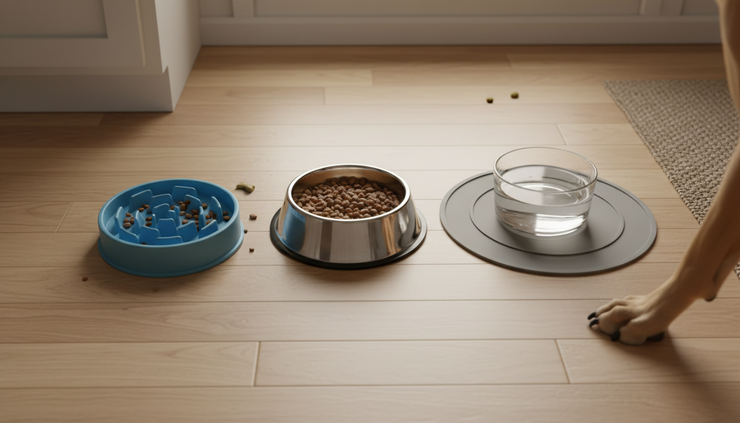
A sturdy stainless steel or ceramic bowl is a smart everyday choice because it is easy to wash and hard to tip. If your dog eats too fast, a slow feeder bowl can turn dinner into a calmer, more controlled activity.
PetstoreForYou.com offers dog bowls and feeders that can help with everyday routines, from non-slip bowls for messy eaters to slow feeders for dogs who gulp their food. Choose based on your dog’s comfort, not just appearance.
When should you use a slow feeder bowl?
A slow feeder may help if your dog:
Finishes meals in seconds
Coughs or gags while eating
Vomits after eating too fast
Steals another pet’s food
Seems restless after meals
Slow feeders use ridges or patterns to make your dog work around the bowl. This can make meals last longer and add gentle mental activity.
Choose a design that matches your dog’s muzzle. Flat-faced breeds need shallow, easy-access designs. Larger dogs may need a wider bowl.
Are automatic feeders helpful?
Automatic feeders can help with consistency if your schedule changes. They may be useful for dry food meals when you need precise timing.
They are not a replacement for checking your dog daily. You still need to confirm your dog has eaten, the feeder is working, and the food is fresh. Automatic feeders are best for healthy dogs with predictable diets, not dogs who need close medical monitoring.
Should you use raised bowls?
Raised bowls can help some dogs eat more comfortably, especially dogs with neck or mobility issues. They are not necessary for every dog.
Ask your vet before using a raised bowl for a large or deep-chested dog, especially if you have concerns about bloat risk. The best setup is the one that supports comfortable, calm eating for your individual dog.
How can you build a dog feeding schedule that works?
Use this checklist to create a simple, repeatable routine.
What checklist should you follow?
Dog feeding schedule checklist
Choose your meal count
Use 2 meals daily for most adult dogs, 3 to 4 for young puppies, and 2 to 3 for seniors who need smaller meals.
Pick steady meal times
Aim for roughly the same times each day, such as 7:00 a.m. and 6:00 p.m.
Measure the daily amount
Start with the food label and adjust for treats, activity, and body condition.
Divide food by meals
Split the daily amount evenly, unless your vet recommends a different plan.
Use the right bowl
Choose a clean, stable bowl. Use a slow feeder if your dog gulps food.
Keep water available
Fresh water should be available throughout the day unless your vet gives specific instructions.
Limit meal distractions
Feed in a calm spot away from other pets if there is competition or stress.
Pick up uneaten food
Give your dog about 15 to 20 minutes, then remove the bowl.
Track changes
Watch appetite, weight, stools, thirst, and energy.
Review with your vet
Ask for guidance during puppy growth, senior years, illness, pregnancy, or weight changes.
What mistakes should you avoid when feeding your dog?
Small feeding mistakes can become habits. The good news is that most are easy to fix.
Are you changing food too quickly?
Sudden food changes can upset your dog’s stomach. When switching foods, transition gradually over several days unless your vet says otherwise.
A common approach is to mix a small amount of new food into the old food, then slowly increase the new food. If vomiting, diarrhea, or appetite loss appears, pause and call your vet.
Are you giving too many treats?
Treats are useful for training and bonding, but they should not crowd out balanced meals. Keep treats small and count them as part of the day’s intake.
Good treat habits include:
Break treats into tiny pieces
Use kibble from your dog’s meal for training
Avoid fatty table scraps
Give chews only when appropriate for your dog’s size and chewing style
Are multiple pets eating from each other’s bowls?
If you have more than one pet, separate them at mealtime. Dogs may eat too fast when they feel competition. Cats and dogs should not share each other’s diets as their main food because they have different nutrition needs.
Feed pets in separate rooms, crates, or gated areas if needed.
Are you ignoring appetite changes?
A missed meal now and then may not be serious, especially if your dog seems normal otherwise. But appetite changes matter.
Call your vet if your dog:
Refuses food for more than a day
Refuses food and seems tired, painful, or sick
Vomits repeatedly
Has diarrhea that does not improve
Drinks much more than usual
Loses weight without trying
Acts hungry but cannot eat
What are the most common questions about feeding dogs?
How often feed dog meals if my schedule changes?
Try to keep meals within the same general morning and evening windows. If your work schedule changes, shift meal times gradually by 15 to 30 minutes per day until you reach the new routine.
Should I feed my dog before or after a walk?
For calm walks, either may be fine. For running, intense play, or long hikes, avoid feeding a large meal right before activity. Many dogs do best with a walk, a rest period, then a meal.
What time should I feed my dog at night?
Feed dinner early enough for digestion and a final potty break. Many households choose a dinner time between 5:00 p.m. and 7:00 p.m., then offer a last potty break before bed.
Why does my dog act hungry all the time?
Some dogs love food and learn that begging works. Hunger can also come from too few calories, low-fiber diets, high activity, certain medications, or medical issues. If the hunger is new or intense, ask your vet.
Is it okay if my dog skips breakfast?
Some dogs skip a meal occasionally. If your dog seems bright, drinks water, and eats later, watch closely. If skipping meals becomes common or comes with vomiting, tiredness, pain, or diarrhea, call your vet.
Can I feed wet food and dry food together?
Yes, many dogs enjoy mixed feeding. Keep the total calories appropriate and introduce changes gradually. Wet food can add moisture and aroma, while dry food is convenient and easy to measure.
How often should puppies eat at night?
Very young puppies may need a small late meal, but most gradually move away from nighttime feeding as they grow. If your puppy is very small, underweight, or has health concerns, follow your vet’s plan.
Should senior dogs eat less food?
Some senior dogs need fewer calories because they move less. Others need more support if they lose muscle or weight. Do not reduce food based on age alone. Watch body condition and ask your vet.
How do I stop my dog from eating too fast?
Use a slow feeder bowl, split meals into smaller portions, scatter kibble on a snuffle mat, or use food puzzles. Feed dogs separately if competition causes gulping.
How much water should my dog drink with meals?
Fresh water should be available throughout the day. Dogs may drink more after dry food, exercise, heat, or salty treats. A sudden big increase in thirst should be checked by a vet.
Should I feed my dog human food?
Some plain foods are safe in small amounts, but many are too fatty, salty, or unsafe. Avoid toxic foods such as chocolate, grapes, raisins, onions, garlic, and xylitol. Keep your dog’s main diet complete and balanced.
When should I change my dog’s feeding schedule?
Change the schedule when your dog enters a new life stage, gains or loses weight, has a health diagnosis, changes activity level, or struggles with the current routine. Make changes gradually when possible.

What is the best takeaway for your dog’s feeding routine?
The best dog feeding schedule is steady, measured, and matched to your dog’s life stage. Most adult dogs do well with two meals a day, puppies need more frequent meals, and seniors may benefit from smaller, easier meals.
Start with a simple routine, measure portions, use a clean bowl that suits your dog’s eating style, and watch your dog’s body condition over time. When in doubt, ask your veterinarian, especially if your dog’s appetite, weight, thirst, or energy changes. A calm, consistent dog feeding schedule gives your dog comfort every day and gives you the confidence that mealtime is supporting their health.


Comments